
Have you ever had a dream where your safe haven suddenly shook and collapsed into ruins before your eyes? Many people wake up from such dreams filled with deep despair and anxiety.
However, a ‘collapse’ shown by your subconscious mind does not simply end in tragedy. At the center of those ruins lies a grand mystery—shattering fragile frameworks you once trusted so you can find an unshakeable, true foundation within.
On July 16, 1990, after experiencing a devastating earthquake in Dagupan and escaping through landslides and heavy rain, I arrived at the mountain plateau city of Baguio. In that peaceful place I thought I knew so well, what I witnessed above the collapsed buildings was humanity’s extraordinary will to live.
Table of Contents
- Unfamiliar Silence and Changed Faces of Familiar People
- Collapsed Schools and Hotels: Tragic Loss of Young Souls
- Helpless Frustration: Aftershocks and Uncontrollable Fear
- Leaving the Dormitories: Tents of Life on the Playing Field
- “Should We Return to Korea?” — Standing at Life’s Crossroads
- The Miracle of the Hyatt Hotel and Cruel Remnants
- Epilogue: The True Foundation Revealed Only After the Collapse
1. Unfamiliar Silence and Changed Faces of Familiar People
When we arrived in Baguio, an eerie, heavy silence hung over the entire city. Warmth had vanished instantly from the faces of residents who were usually vibrant and full of laughter.
Some were clearing collapsed brick walls with stunned expressions, while others swept away dust and debris around fallen structures in silence. Deep terror and despair beyond words coated every quiet, busy movement of the people.
Tightly holding my wife’s hand, I stood in the middle of the road, unsure of what to do first. When the safe zone you trusted most turns into unfamiliar ruins in a single second, you realize how helpless human beings are—forced merely to gaze at the devastation before them.
2. Collapsed Schools and Hotels: Tragic Loss of Young Souls
The destruction in Baguio at the time was almost too hard to believe, even seeing it with my own eyes. Major landmark buildings, luxury hotels, and school buildings where children studied crumbled like sandcastles.
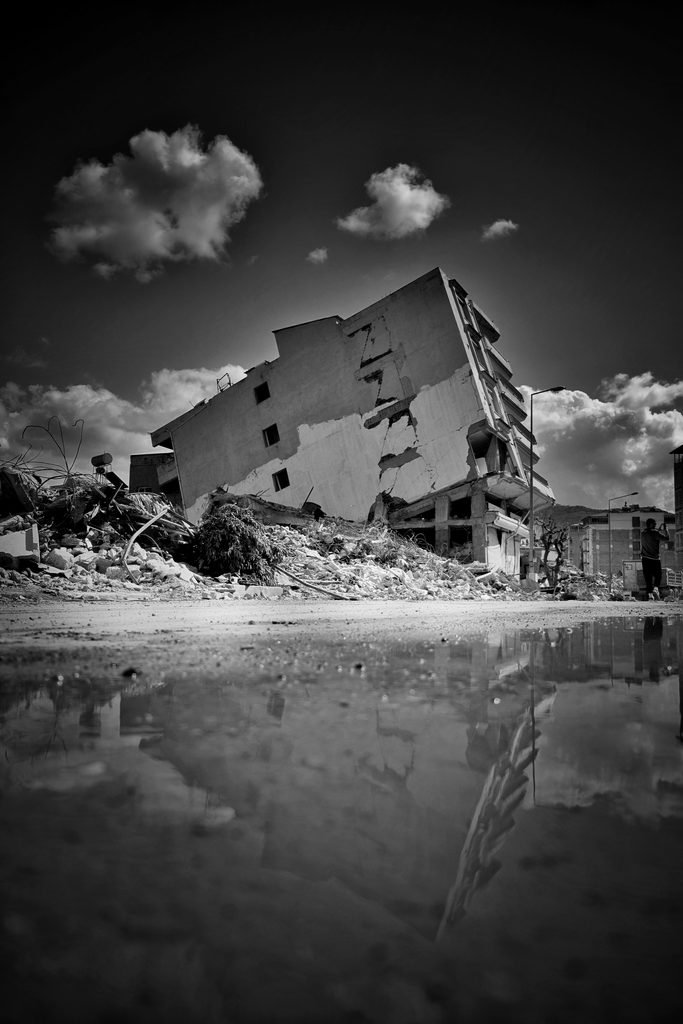
Spaces that should have echoed with children’s laughter turned into cold concrete rubble, accompanied by painful news that many students had lost their lives inside. What weighed on my heart even more heavily than the physical collapse was the cold reality that loved ones were trapped beneath that massive debris.
Even after more than thirty years, the chilling weight in my heart from gazing upon those ruined foundations does not easily fade.
3. Helpless Frustration: Aftershocks and Uncontrollable Fear
What felt even more agonizing was knowing people were trapped under the rubble yet being unable to step inside immediately to rescue them. The ground thundered continuously, sending aftershocks that warned of imminent secondary collapses.
Because major roads were blocked by landslides, heavy machinery could not enter the city. Ultimately, local miners risked their lives, crawling with bare hands between jagged concrete blocks and rebar.
How heart-wrenching must it have been for parents standing outside, stomping their feet in agony? Watching them weep while shouting the names of their children who might still be alive pierces my heart to this day.
In psychology, the most extreme fear human beings experience is called “a sense of helplessness from an uncontrollable situation.” The earthquake did not merely shake the physical ground; it shattered human inner peace and the foundation of daily life into pieces.
4. Leaving the Dormitories: Tents of Life on the Playing Field
Arriving in Baguio did not mean we could step into a warm room right away. Fear of aftershocks forced us to leave the school dormitories behind and stay out in open spaces, like a large athletic field.
Though cold rain fell and harsh night winds blew, staying outdoors at least relieved the fear of concrete roofs collapsing over our heads. Every minor vibration made every cell in our bodies tense up, and deep, lingering anxiety remained visible in people’s eyes.
When the protective fence of a “safe home” disappears, the sense of isolation and loneliness a human being feels is indescribably vast.
5. “Should We Return to Korea?” — Standing at Life’s Crossroads
During that period, my wife and I fell into deep agony:
“Should we pack everything up and return to Korea right now?”
“Is it safe to stay here when the place we trusted is no longer secure?”
The sense of loss when your supporting environment shakes threatens your very foundation. Yet, as time passed, a remarkable sight began to unfold before our eyes.
Baguio residents who had been paralyzed by despair began coming outside one by one, holding sacks and brooms. They cleared fallen bricks, swept away dust, and quietly rebuilt their daily lives to keep living.
Scripture in 2 Corinthians 4:16 states:
“Therefore we do not lose heart. Though our outward man is perishing, yet the inward man is being renewed day by day.”
Outward structures and physical environments (the outward man) can be destroyed and worn away in an instant. However, the human spirit and faith (the inward man) seeking to rise again through trials grow even stronger through hardship.
The strength that enabled the people of Baguio to stack bricks again amidst ruins was precisely this power of the inner self.
6. The Miracle of the Hyatt Hotel and Cruel Remnants
At the time, the epicenter of Baguio’s most shocking tragedy was the Hyatt Terraces Hotel. As the grand luxury hotel collapsed completely, numerous guests and employees were trapped beneath the rubble.
Yet even in the deepest darkness of despair, miracles bloomed. Rescue teams never gave up searching through pitch-black darkness where life and death crossed paths. Miraculously, survivors walked out 11 days after the earthquake—and even nearly two weeks later.

Conversely, there were heartbreaking reports of individuals who managed to escape the building only to lose their lives when struck by falling debris outside. Seeing that escaping outside did not guarantee complete safety, I felt the extreme unpredictability of human life deep in my bones.
Epilogue: The True Foundation Revealed Only After the Collapse
If you saw your house or home collapse in a dream, it is not an ill omen predicting misfortune. It is a gentle inner question asking:
“Where is your life anchored today?”
Things we often view as absolute—money, status, or external circumstances—are like houses built on sand, crumbling helplessly before unexpected earthquakes in life.
However, like the wise man in Matthew 7 who built his house upon the rock despite others’ mockery, if the core of your soul stands upon solid truth and faith (the rock), no storm can ever destroy your core identity.
In July 1990, Baguio was completely shattered. Yet the lives and hopes of its people were not destroyed.
That resilience—the ability to place bricks back onto a ruined foundation one by one—is within you too. Tonight, if you feel anxious because your life’s foundation feels shaky, remember this:
You already possess the sacred strength within you to rebuild a home far stronger than before upon any ruined ground.
🌙 One-Line Dream Summary: “A dream of a collapsing home is not a sign of tragedy, but an invitation to discover the unshakeable inner rock beneath the ruins.”
Baguio earthquake, 1990 Luzon earthquake, House collapsing dream meaning, Dream interpretation, Overcoming trauma, Resilience, Faith in trials, Inner strength, Personal growth, Biblical reflection, Hope amidst ruins, Life wisdom